Based on the 2026 ADA and AAOMR Patient Selection Criteria for Dental Radiography and CBCT
Dental caries is one of the most frequently diagnosed conditions in dental practice. Box 2 of the updated 2026 ADA and AAOMR Patient Selection Guidelines addresses specific indications for radiographic imaging. Today’s post section is caries detection.
Here’s a breakdown of each guideline and what it means in practice.
2.1.1 — No CBCT for Caries. Ever.
Guideline: CBCT is not indicated for caries detection.
What this means: Simple and non-negotiable. CBCT delivers a substantially higher radiation dose than conventional radiographs and does not improve caries detection. If decay is what you’re looking for, CBCT is not the answer. This aligns squarely with the ALARA principle: use the lowest dose that still gets you the diagnostic information you need.
2.1.2 — Anterior Proximal Caries: Go Periapical
Guideline: For anterior proximal caries that are not clinically visible, periapical radiographs are indicated.
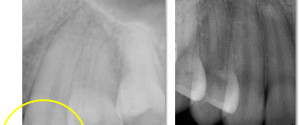
What this means: When you can’t see interproximal decay in the anterior teeth clinically, periapical radiographs are your go-to. They’re well-suited for anterior anatomy and provide a clear view of proximal surfaces where decay tends to hide.
2.1.3 — Posterior Proximal Caries: Bitewings Are Best
Guideline: For posterior proximal caries that are not clinically visible, bitewing radiographs are the best option.
What this means: Bitewing radiographs remain the gold standard for evaluating proximal caries in posterior teeth. They provide optimal visualization of the crowns and interproximal bone — and they’re the most efficient, dose-conscious choice. When in doubt about posterior proximal decay, order the bitewing radiograph.
2.1.4 — Visible Proximal Lesions: Periapical or Bitewing Can Both Work
Guideline: For diagnosis and depth estimation of proximal caries on clinically visible surfaces, periapical or bitewing radiographs may be indicated.
What this means: If you can already see the lesion clinically, imaging can still be valuable — specifically to assess how deep the decay extends. Both periapical radiographs and bitewing radiographs work, use your clinical judgment about which view gives you the best angle for the tooth in question.
2.1.5 — Occlusal Caries: Imaging Can Help Assess Depth
Guideline: For occlusal caries, periapical or bitewing radiographs may be indicated.
What this means: When you suspect or have confirmed occlusal caries and need to understand how far it extends, radiographic imaging is a useful adjunct. Use either a periapical or bitewing depending on the tooth and your clinical presentation. The goal is depth assessment — not just confirmation of what you can already see.
2.1.6 — Root Caries: Same Approach Applies
Guideline: For root caries, periapical or bitewing radiographs may be indicated.
What this means: Root caries can be particularly difficult to assess clinically, especially in patients with recession or altered gingival anatomy. Periapical or bitewing radiographs help you determine how far the lesion has extended — critical information for treatment planning and prognosis.
2.1.7 — Smooth Surface Caries: Clinical Exam Comes First
Guideline: For diagnosis and depth estimation of smooth surface caries, visual examination is preferred over radiographic imaging in teeth with no clinical signs or symptoms associated with pulpitis or periodontal disease.
What this means: When evaluating smooth surface lesions in an otherwise asymptomatic tooth, your eyes come first. Radiographic imaging adds little diagnostic value unless there are concurrent signs of pulpal involvement or periodontal disease. This is ALARA in practice — don’t expose when the clinical exam can give you what you need.
The Bottom Line
The caries imaging guidelines reinforce a clear principle: match the modality to the clinical question. Bitewing radiographs for posterior proximal caries. Periapical radiographs for anterior proximal caries. And never CBCT — for any caries evaluation.
This post is part of a continuing series on the 2026 ADA and AAOMR guidelines. Next up: imaging recommendations for periodontal disease.
Previous post – General Recommendations.