Why Do Cysts Look “Hydraulic” on Imaging?
The term “hydraulic” gets used a lot to describe the radiographic behavior of jaw cysts — the smooth, balloon-like expansion, cortical thinning, root displacement, and scalloped margins that make them look like fluid is simply pressing outward from the inside. That’s because it is.
The Mechanism: Osmotic Drive + Hydrostatic Pressure
Cyst fluid is not passive. Its composition creates an osmotic gradient that continuously draws fluid across the semi-permeable cyst lining into the cyst cavity. Over time, this causes intracystic pressure to build — and that pressure has to go somewhere.
Think of it like a water balloon. As fluid accumulates, the cyst pushes outward against everything it contacts — buccal and lingual cortex, adjacent root surfaces, and cancellous bone — conforming to and reshaping the surrounding anatomy with steady, unrelenting pressure.
Why Does Bone Resorb?
Sustained pressure on the bone interface activates osteoclasts, which gradually resorb the surrounding bone. The result is slow, centrifugal expansion — not aggressive destruction, but a steady, pressure-driven retreat that produces a well-defined margin.
The Radiographic Signature
This mechanism produces a recognizable constellation of findings:
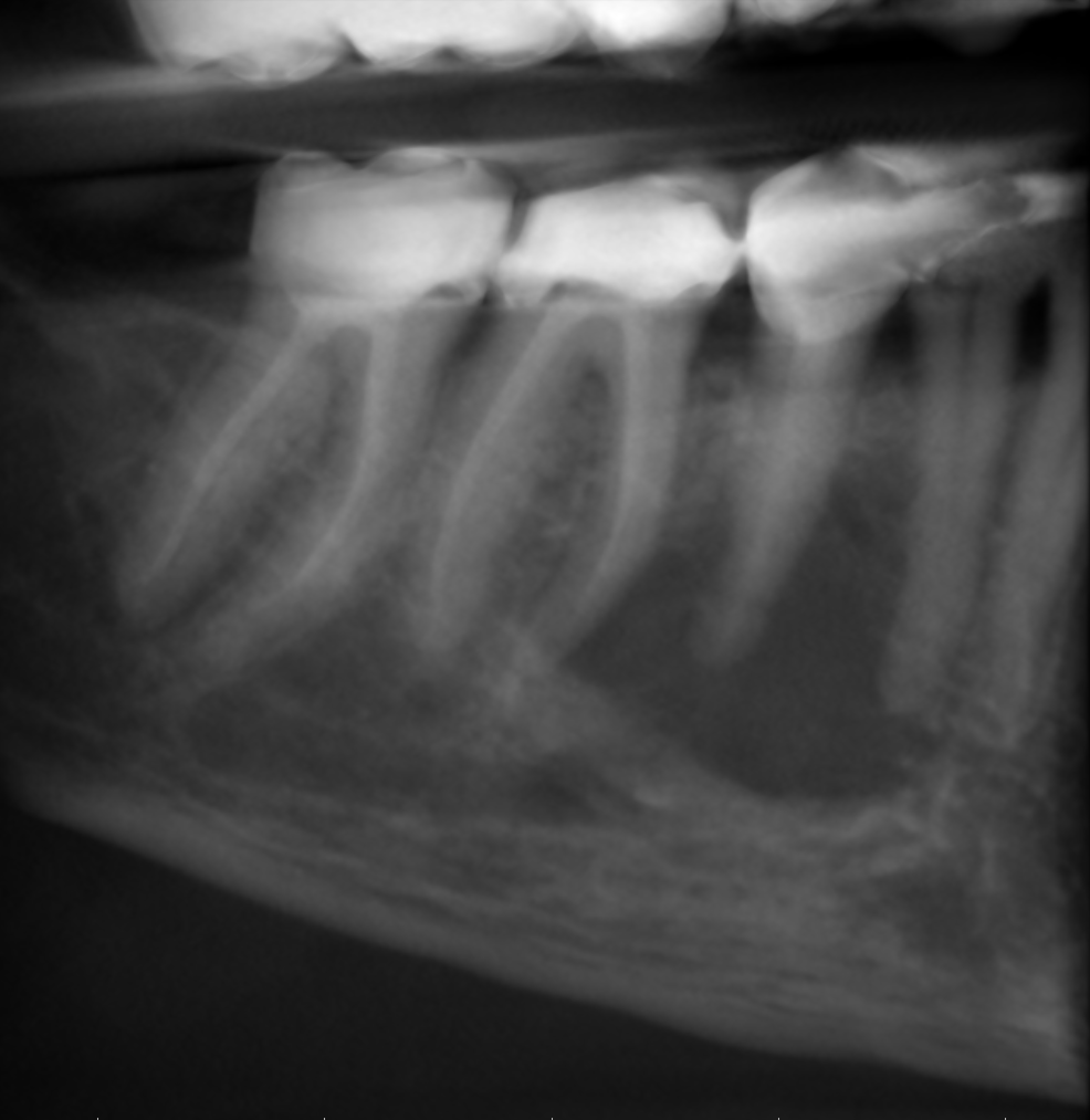
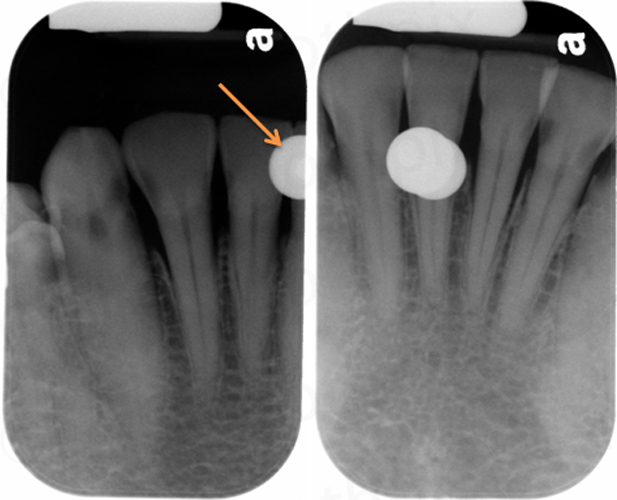
Root displacement and divergence. Roots behave like objects floating in fluid — they are pushed apart rather than resorbed, producing the classic “hydraulic” periapical appearance where roots splay outward and the lesion scallops between them.
Smooth, well-defined margins. The even distribution of pressure means the advancing front is uniform, producing a well-defined border — a hallmark of slow-growing, benign processes.
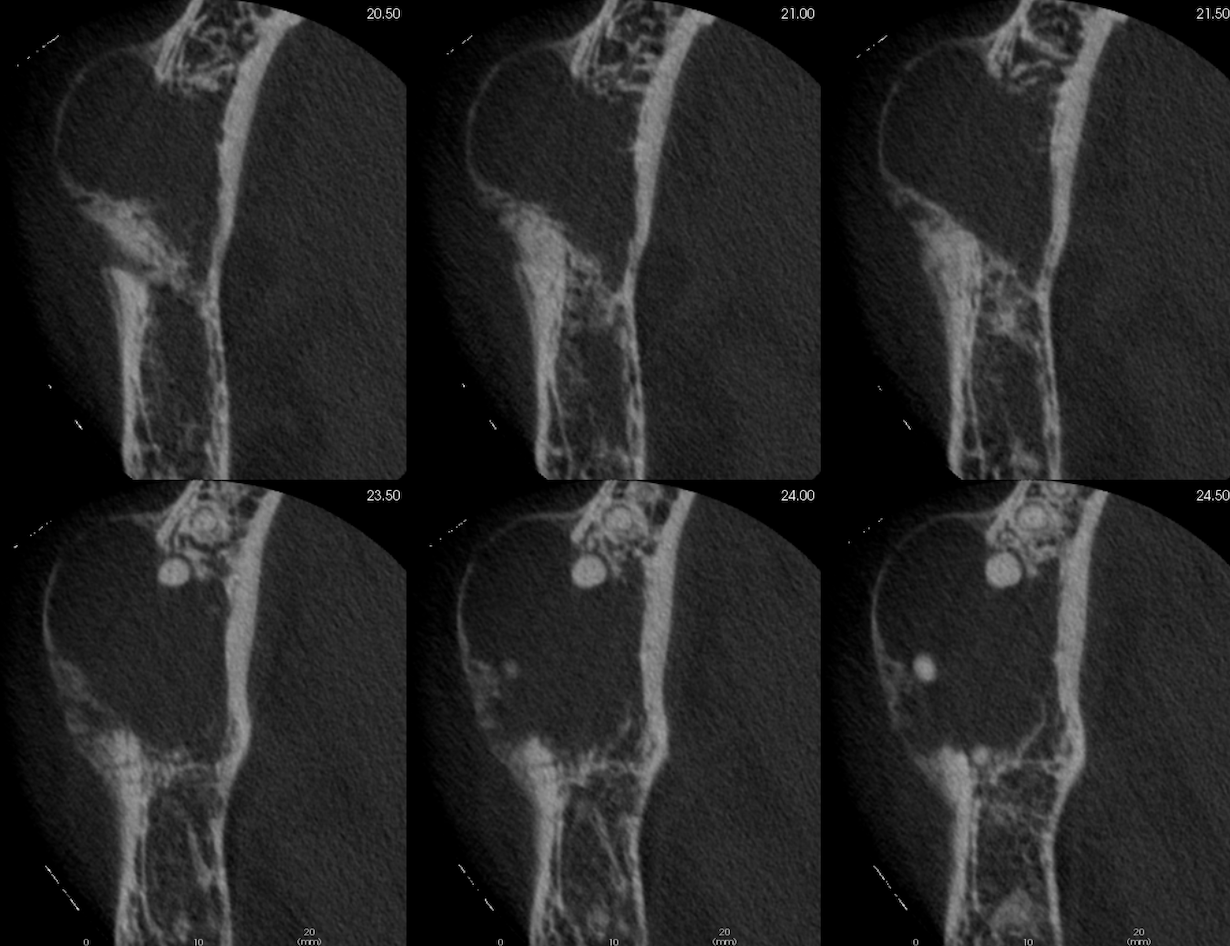
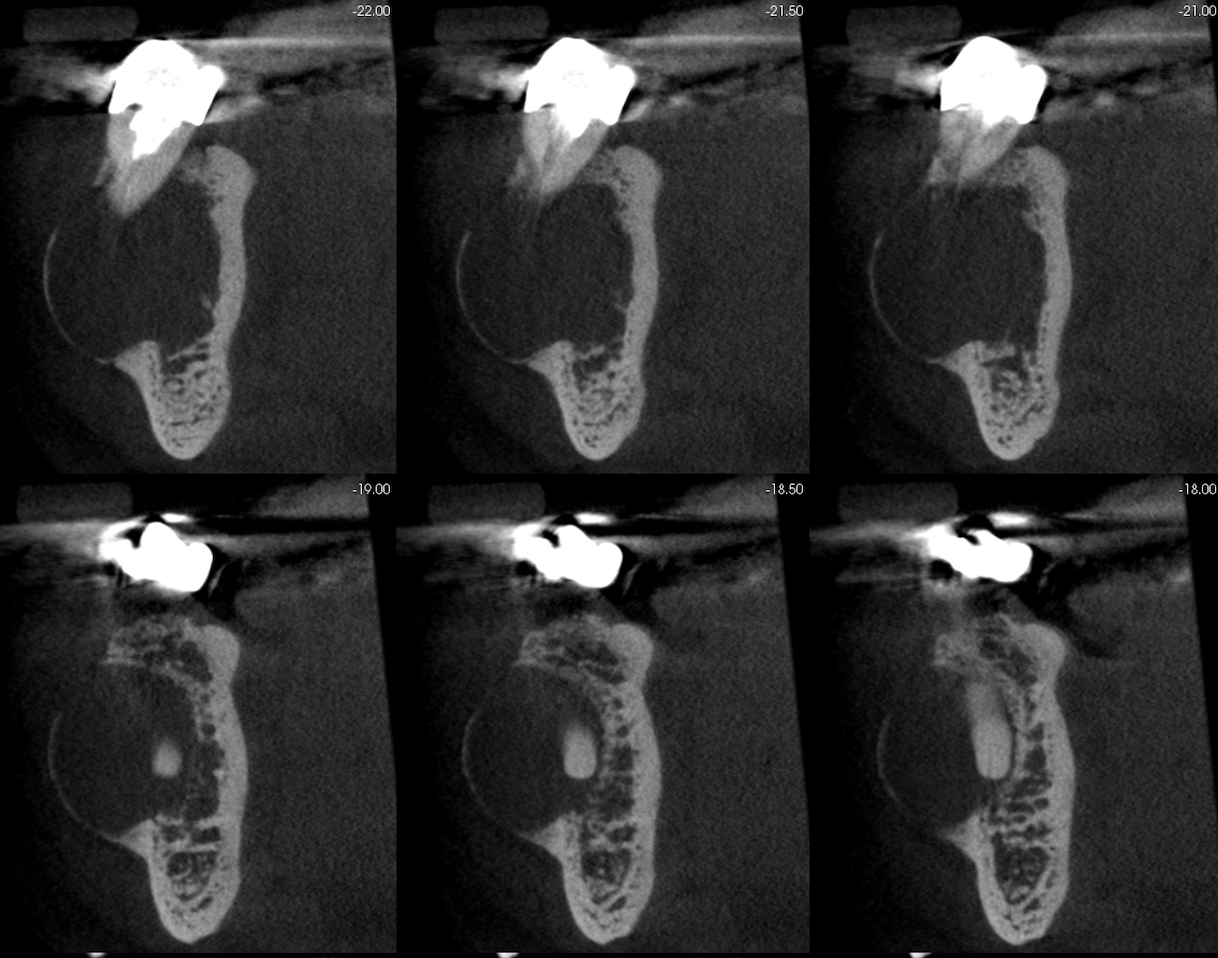
Cortical thinning and expansion. Buccal and lingual plates thin progressively before eventually perforating. On CBCT, this produces the characteristic eggshell-thin or absent cortex, often with a striking balloon-like buccal expansion.
Scalloping between roots. As the cyst fills the interradicular space, it conforms to the root anatomy — exactly what you’d expect from a fluid-filled structure pushing against fixed objects.
Which Lesions Show This?
The hydraulic appearance is most pronounced in high-pressure cysts with significant fluid production: radicular cysts, dentigerous cysts, and unicystic ameloblastoma. Odontogenic keratocysts, despite their locally aggressive behavior, tend to grow along the length of the jaw first before expanding it — a useful distinguishing feature on imaging.
The Takeaway
The “hydraulic” descriptor is more than a radiographic metaphor. Fluid accumulates, pressure builds, and bone gradually gives way — producing the smooth expansion, cortical thinning, and root displacement that characterize these lesions. Recognizing this pattern, and understanding why it occurs, helps distinguish these lesions from more aggressive pathology and informs both the clinical assessment and the surgical approach.
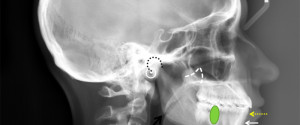
Here are a few examples from a case showing this.